About & Quality

Liquid silicone components, engineered and molded in-house.

HY is an LSR manufacturer in Zhongshan, Guangdong, serving medical, infant & mom, automotive and electronics programs. Tooling, cleanroom molding, secondary operations and inspection all run in-house.

2015Founded in Zhongshan
189Team members
7Engineers
50LSR injection machines
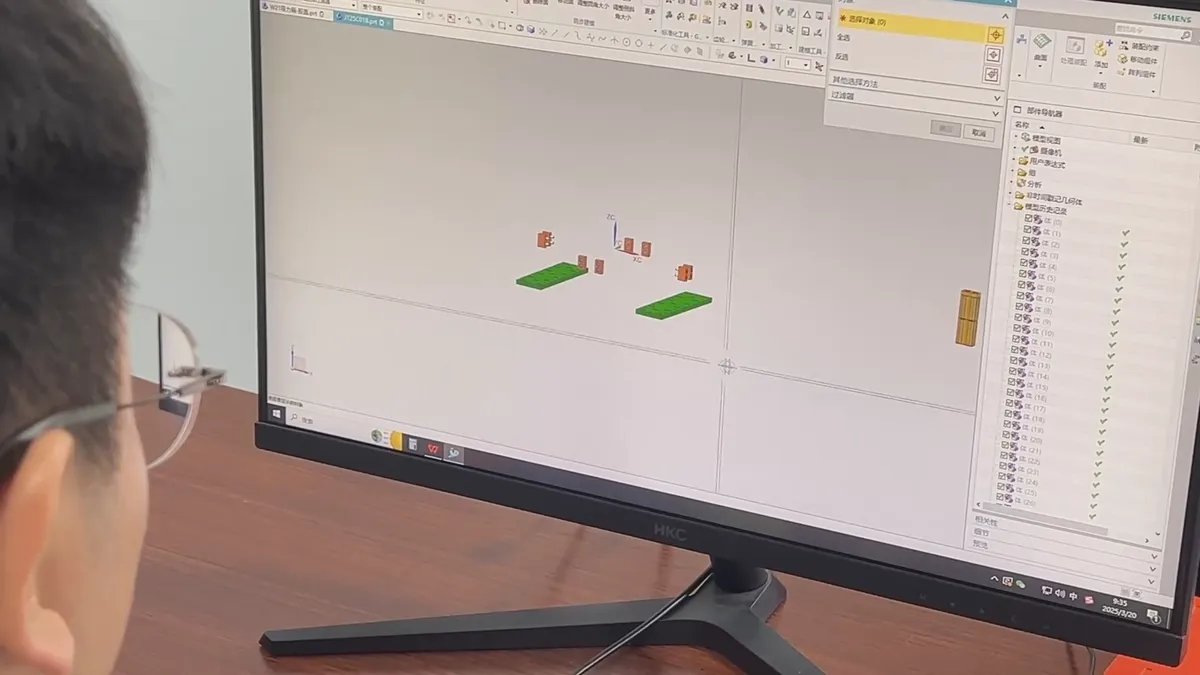
Engineer reviewing an LSR mold design in CADMold design review

Engineering support

Technical support from design review to first article.

Every project starts with a review of your CAD, tolerance stack and material choice. The process window is then developed on real tooling, measured against the drawing, and documented before production.

  1. 01

    CAD and DFM review

    Drawing, draft angles, parting line, gate position and shrinkage are reviewed before steel is cut.

  2. 02

    Process developed on real tooling

    Trial parts are measured against the drawing, and the process window is adjusted until the part is repeatable.

  3. 03

    Release documented

    Inspection criteria, material grade and tooling revision are recorded, so the approved part is the part you receive at volume.

Talk to an Engineer
Facility

One building. Two cleanrooms. One controlled flow.

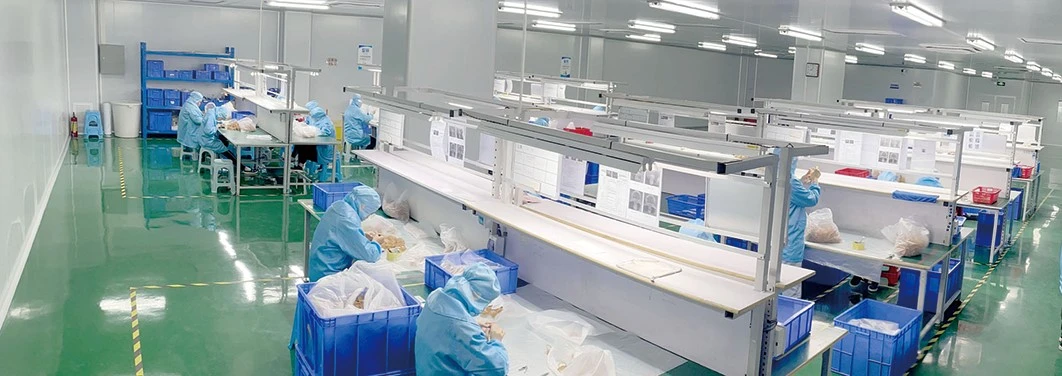
Molding, secondary operations and inspection sit in the same four-storey building — 15,000 m² across two production floors, one office floor and one warehouse floor.

  • Two independent ISO 8 (Class 100,000) cleanrooms
  • 6-axis and 3-axis robots in both cleanrooms
  • 50 LSR injection machines (85–160T) and 5 thermoplastic machines
  • 3 LSR 2K (two-shot) molding systems
  • In-house secondary operations: trimming, post-curing, cleaning and surface treatment
  • Assembly, final inspection and packaging under the same roof
  • Metrology lab with CCD vision and 2D vision measurement (video microscope)
  • Tear and pull testing, plus RoHS and VOC analyzers
Operators at assembly and inspection stations inside an ISO 8 cleanroom
ISO 8 cleanroom — assembly, inspection and packaging on the same production floor.

Quality control

Inspection built into every production stage.

Quality is not a final sorting step. We inspect incoming material, the first shot, the running process and the outgoing lot — with the measurement method matched to the feature.

01 / INCOMING

Material & incoming inspection

Silicone lot identity, certificate of analysis, shelf life, color and durometer are checked against the approved specification before release to production.

  • CoA and lot traceability
  • Durometer and visual verification
  • Substrate and insert IQC
02 / IN-PROCESS

First-shot & in-process checks

T1 samples establish the dimensional baseline. During production, critical features and cosmetic criteria are checked at defined intervals against the control plan.

  • First-article inspection (FAI)
  • Critical-dimension checks
  • Flash, tear and cosmetic limits
03 / FINAL

Dimensional & functional release

Final inspection combines dimensional measurement with application-specific tests such as leak, pull, peel or compression set, then packs with lot documentation.

  • CCD vision inspection
  • Non-contact video microscope (2.5D)
  • Shore A durometer and pin gauges
  • Tear, pull and leak testing
  • Inspection report per lot

Inside the plant

Lab, test and production, on one site.

Four short clips from the floor — metrology, leak testing, post-cure baking and the LSR molding cell.

Facility

Metrology Lab

Dimensional checks on a non-contact measurement system.

Facility

Leak & Function Testing

Pressure-decay and functional checks before release.

Facility

Post-Cure Baking

Controlled post-curing for consistent mechanical properties.

Facility

LSR Molding Cell

Cold-runner molding on the production floor.

Compliance

Built around regulated supply chains.

Four certifications cover quality, medical devices, occupational health and safety, and environmental management. Material-level compliance — FDA, LFGB, USP Class VI and ISO 10993 — is documented by the certified silicone producers listed below.

ISO 9001General quality management across tooling, molding and inspection.
ISO 13485Medical device quality-system alignment for regulated components.
ISO 45001Occupational health and safety management across production and cleanroom operations.
ISO 14001Environmental management for manufacturing and waste control.

Material partners

Certified silicone from producers your regulatory team already knows.

We mold LSR from qualified grades sourced through authorized distribution channels, so material compliance documentation — FDA 21 CFR 177.2600, LFGB, USP Class VI and ISO 10993 — traces back to the original producer.

PARTNER 01

Wacker

Qualified LSR grades for general-purpose, medical and food-contact programs, with lot-level certificates of analysis and regulatory documents supplied on request.

PARTNER 02

Dow (formerly Dow Corning)

Medical-, automotive- and consumer-grade LSR, with biocompatibility and food-contact documentation available per grade.

PARTNER 03

Shin-Etsu

Medical- and general-purpose LSR grades with consistent lot-to-lot quality and full regulatory documentation.

PARTNER 04

Momentive

LSR grades for healthcare, automotive and industrial sealing, with compliance documents supplied per grade.

Material certificates, CoA and regulatory documents are issued by the material manufacturer. HY supplies them with the lot on request; final product approval remains with the product owner.

How we operate

A professional team. Short feedback loops.

PRINCIPLE 01

Say what is true

If a tolerance is unrealistic, a material is wrong or a tooling route is risky, we say so before the PO — not after the first shot.

PRINCIPLE 02

Control the interface

Most LSR failures live at the interfaces: substrate, parting line, gate, seal surface. That is where we focus engineering time.

PRINCIPLE 03

Document the release

A part is not released because it looks right. It is released against a drawing, a process window and a measured inspection result.

PRINCIPLE 04

Scale without surprises

Pilot tooling and production tooling are planned together, so the part you approve is the part you receive at volume.

Due diligence

Ask us the uncomfortable questions.

Send your drawing and current supplier issues. We reply within 48 hours with a feasibility review — and tell you what we would change, what we would validate, and what we would not promise.